Discover the ultimate playground of volcanoes along the White Pass Scenic Byway, one of Washington’s most scenic drives. This unforgettable journey connects three iconic Washington volcanoes, Mount Rainier, Mount St. Helens, and Mount Adams, each with its own unique personality, landscape, and history.
Experience the towering glaciers of Mount Rainier, explore the dramatic volcanic terrain of Mount St. Helens, and take in the quiet beauty of Mount Adams rising above the eastern Cascades. From hiking and sightseeing to outdoor recreation and breathtaking viewpoints, the White Pass Scenic Byway offers the rare opportunity to experience all three volcanic giants in one extraordinary Washington adventure.

The crown jewel of Washington and the granddaddy of the Cascades. At nearly three miles high, Mount Rainier towers higher than any other mountain in the state and holds the title as the second highest peak in the contiguous 48 states. Since 1899, this natural wonder has been showcased in the 365-square-mile Mount Rainier National Park. Mt. Rainier is surrounded by deep valleys, cascading waterfalls, dramatic wildflower meadows, awe-inspiring old-growth forests, and 26 glaciers. Whether photographing the meadows, climbing to the summit, trekking along the trails, or just admiring the view, over one million visitors come to the park each year to experience the magic on the mountain.
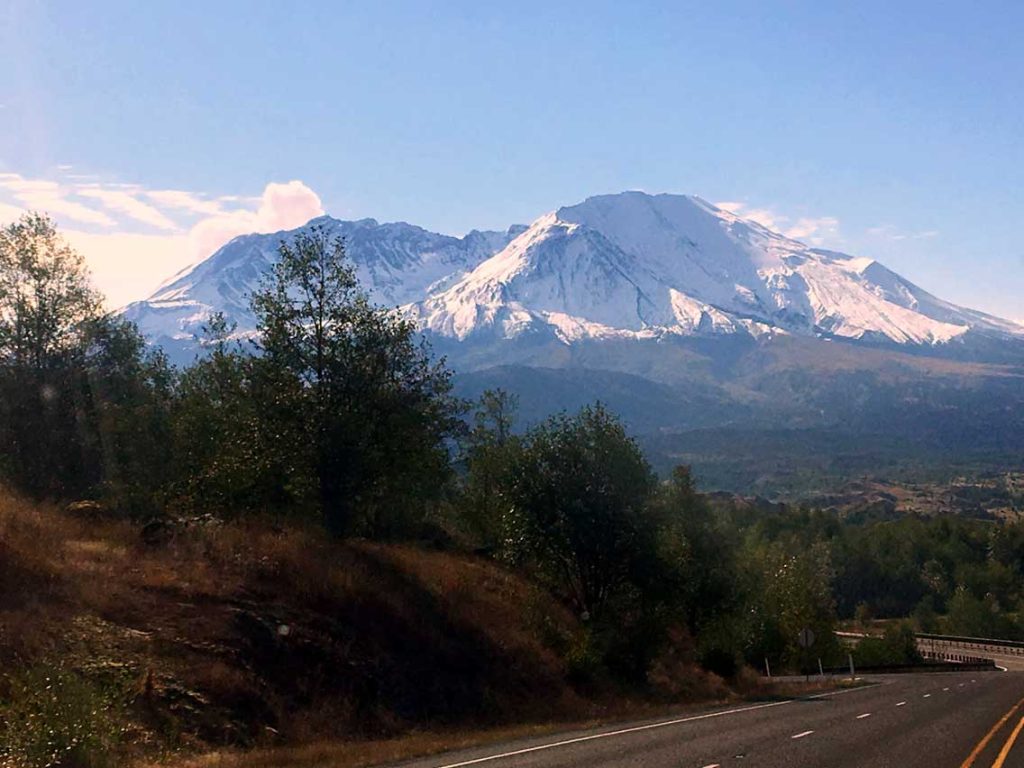
May 18th, 1980 forever changed the landscape of this once near-perfect volcanic cone. Spewing ash into the atmosphere that circled the globe, Mount St. Helens, remains the most dramatic example of active volcanic activity in the continental United States. In a near-instant, 200 square miles of rich forestland was transformed into a gray, lifeless landscape. Today the blast zone is a world-renowned area of scientific research into the regeneration of living systems following volcanic disturbance. Witness nature’s awe-inspiring recovery process as wildlife reclaims its home. World-class visitor centers skirt the mountain and recreational opportunities are plentiful throughout the region. Discover nature’s raw power and a restoration project of immeasurable proportions.
For the more adventurous traveler, include a visit to 12,276 foot high snow capped Mount Adams – the least developed of the three volcanoes in the corridor. Its distance from population centers and roads makes this mountain a relatively isolated mountain. With no visitor centers or paved access roads, Mount Adams Wilderness is a true backcountry experience and a classic Washington getaway. Camping is popular from early July to late October or early November. Venture out into remote forests offering stunning alpine lakes, plentiful wildlife, and opportunities for long and short hikes. For many, this area is tops for a true wilderness experience. If you’re looking to escape civilization, this is the place to do it.
The crown jewel of Washington and the granddaddy of the Cascades. At nearly three miles high, Mount Rainier towers higher than any other mountain in the state and holds the title as the second highest peak in the contiguous 48 states. Since 1899, this natural wonder has been showcased in the 365-square-mile Mount Rainier National Park. Mt. Rainier is surrounded by deep valleys, cascading waterfalls, dramatic wildflower meadows, awe-inspiring old-growth forests, and 26 glaciers. Whether photographing the meadows, climbing to the summit, trekking along the trails, or just admiring the view, over one million visitors come to the park each year to experience the magic on the mountain.
May 18th, 1980 forever changed the landscape of this once near-perfect volcanic cone. Spewing ash into the atmosphere that circled the globe, Mount St. Helens, remains the most dramatic example of active volcanic activity in the continental United States. In a near-instant, 200 square miles of rich forestland was transformed into a gray, lifeless landscape. Today the blast zone is a world-renowned area of scientific research into the regeneration of living systems following volcanic disturbance. Witness nature’s awe-inspiring recovery process as wildlife reclaims its home. World-class visitor centers skirt the mountain and recreational opportunities are plentiful throughout the region. Discover nature’s raw power and a restoration project of immeasurable proportions.
For the more adventurous traveler, include a visit to 12,276 foot high snow capped Mount Adams – the least developed of the three volcanoes in the corridor. Its distance from population centers and roads makes this mountain a relatively isolated mountain. With no visitor centers or paved access roads, Mount Adams Wilderness is a true backcountry experience and a classic Washington getaway. Camping is popular from early July to late October or early November. Venture out into remote forests offering stunning alpine lakes, plentiful wildlife, and opportunities for long and short hikes. For many, this area is tops for a true wilderness experience. If you’re looking to escape civilization, this is the place to do it.
Questions or Comments? Drop us a note we’d love to hear from you.